Showing posts with label Collection development. Show all posts

Monday, October 26, 2009

Not my picks

As I've mentioned before, another librarian on staff purchases children's literature with funds from a small endowment (very small). A large cart arrived on Friday afternoon and I had a few minutes this afternoon to peruse a few of the selected titles. Here is what's new to me:

I took The Miles Between to lunch this afternoon, but did not finish it (I did read the end). Late last week I went through two issues of Booklist and the most recent School Library Journal. I should have another cart of juvenile books in B & T by the end of the week. I love doing collection development for juvenile and young adult books.

Monday, September 07, 2009

Shameful follow-up

Monday, I posted about gleefully working my way through six back issues (or three months) of Booklist and School Library Journal. Before I was able to feel too smug about the accomplishment, even with the fine sheen of shame, the September issue of Booklist appeared in my mail box. Since I was in the mood and this issue had a few Thanksgiving titles, it was a simple matter to peruse and purchase another 22 titles for the juvenile collection. Here are a few of my selections:
Purchasing holiday books is often a bit of a conundrum; student teachers are in the classroom for the fall season, Halloween, and Thanksgiving, yet finished the first week of December. The juvenile collection does include Christmas, Hanukkah, Kwanzaa, and Chinese New Year (to name a few), but they are not as extensively used during the traditional down times between the fall and spring academic year. With luck on my side, the Halloween and Thanksgiving titles on this list will be shelf ready in time for classroom use.

Monday, August 31, 2009

Slightly shameful

The most recent additions to "my" juvenile collection are titles reviewed and selected to finish empty budget lines for the 2008-2009 academic year (ending June 30th). After noting release dates, titles pending publication after May 31st were placed in a B & T folder; on hold for purchase at the beginning of the 2009-2010 academic year (beginning July 1st). With permission given to the acquisitions librarian to begin purchasing, they have since become the only books added to the collection over the summer. Even experiencing back-up in cataloging, this is not a good way to begin a new school year ... my new book shelves are empty sans ten titles. Most of the new books have already begun circulating, the patrons expect and peruse the new books on a regular basis.

For weeks I have been dragging three months worth of Booklist and School Library Journal, not to mention print lists of Horn Book newsletters and Publisher's Weekly feeds, back and forth between my office and the resource center hoping for a few minutes to begin the review process. Today, I had an opportunity to spend the afternoon selecting children's books. It was very enjoyable, except for the short window of purchasing due to availability and print runs of juvenile literature. Titles from the July and August journal issues were sold out, out of stock, and awaiting restocking with our jobber. Chances are I will still get many of them, but after repeated instances of OS, I did something I rarely do; something frowned upon from a collection development perspective. I went through the June titles and looked at the stars for purchase.

I did not automatically choose a starred review, but they did get a significant amount of my attention. I am feeling slightly shameful ... but, I will persevere. ;-)

Friday, May 22, 2009

Last of the budget

This has been one of the oddest academic years I have had; with seemingly unending emphasis on technology and web design little time has been available to read the juvenile books purchased. These last few weeks I have made a concentrated effort to rectify that situation, but find myself with the attention span of a cranky 3-year old. Books accompanied me to lunch and, more often than not, returned to the library unfinished. In some cases I did not even bother to read the end (I'm famous for that, it drives co-workers crazy), never a good sign. As luck would have it, one of my resource center budget lines had a bit of money remaining; the line I use to buy juvenile books.

A few of the titles I selected are detailed below. I hope one of them, or one of the two books I chose to take out of town with me, Absolutely Maybe and The Witches of Dredmoore Hollow, break my book ennui.

Time will tell, but in the meantime I am enjoying the freedom of better Internet connection with my new laptop and recently purchased wireless mouse (with usb connection). It's nice to be able to post without dropping the dial-up connection.

Sunday, February 10, 2008

Working Sunday, breaking the bank

Today is the second day of my first weekend to work this lovely spring term. As I scrutinize the large pile of catalogs I brought to the reference area in preparation of making a hefty dent in my budgets (yes budgets, plural), the wind is literally howling in the elevator shafts accompanied by the gentle, slightly hypnotic, sway of the pendulum sculpture outside of the library. Under a severe wind and wind chill advisory with winds gusting to 36 mph, a balmy temperature reading of 8 with wind chill factoring in at -13, we have determined if those blasted winged monkeys fly in the doors - we're out of here. That said, business has been oddly constant during the last three hours.

A natural focus of my money spending efforts is juvenile fiction and literature; the review resource today is the February 2008 edition of School Library Journal. Of specific interest are the regular juvenile reviews, grade 5 and up and preschool to grade 4, an interesting article on widgets - Widgets to the Rescue - I printed and passed along to the librarian web site committee, and a listing of the 2008 Outstanding International Books awarded by USBBY. We had half of the books presented within the article and I emailed four of the children's literature professors asking if they would like me to purchase remaining titles for our collection. A quick response from my favorite professor indicated this was a good idea and half an hour later I ordered twenty juvenile and ya titles for the library. Between my juvenile orders yesterday and today (only 45) and another librarians selections for a juvenile fiction library endowment (99 titles!), we have a nice group of titles on the way.

I am now ready to start through the remainder of today's catalog options with hope I will find reference titles, software titles, materials kits, ellison dies, and even promotional pens (if students are taking pens from the resource center, it is not a bad idea to have them market the center for me). Here's what I am starting with:

I keep saying we don't have room for more Ellision dies, but I always find a way to order additional pieces for the collection. I also have Ishmael with me and hope to finish the review to post at dinner.

Tuesday, December 18, 2007

Early lunch blogging: Collection development

Instructors at the university take advantage of the opportunity presented with library reserves, both electronic and book. One of the children's literature professors routinely places juvenile award book winners on reserve for class projects; included are Caldecott (10 years), Coretta Scott King, and in years past Children's Choice and Teacher's Choice from the International Reading Association. Each year in November, The Reading Teacher publishes an annotated list of these selections. This means each year in December I work with the reserves person, I search and pull the new titles and order additional selections as needed, she pulls the old titles and prepares the new titles for reserves. I also print out and bind hard copies of the award lists for the reserves student workers (saving wear and tear on our hard copy of the journal).

Though part of the IRA Choices booklist, the annotated copy of Young Adults' Choices is made available in the November issue of Journal of Adolescent & Adult Literacy.


What I need to accomplish this afternoon is note what we have, do not have, and/or need to add to the juvenile collection from these booklists. While not traditional collection development, this is a quick way to make sure the juvenile section has books that will definitely be used by students this spring (2008) and next fall (2008). Before I hit the ground running with this project, ordering titles, I have contacted the professor who teaches the children's literature class to verify she is indeed going to use these books for her course.


Lunch is early today, so I am multi-tasking making good use of time left before Christmas break begins tomorrow at noon!

Monday, December 03, 2007

Missing, lost & paid, or under the bed

Approximately twice a year the technical services/cataloging assistant brings me a listing of juvenile books that are missing, lost and paid, or gathering dust living under beds in the dorms until the end of the year. I go through the list and determine what titles and their corresponding records can, and should, be deleted from the catalog. The multi-page document has been sitting on top of my growing "to do" pile (yes, I did mean to write pile and not list) beckoning me for attention. The end of last week I determined what could be deleted and what I wanted to re-order. And, because I am greedy about my book buying budget, I asked the acquisitions librarian if the replacement copies should be ordered from a specific line. If money was collected for "lost and paid," that same money should be used to purchase replacements.

While the cataloging librarian was a bit taken aback that I asked, she almost speechless to learn the answer to my question was yes (hah!). The answer I wanted, as opposed to the answer I was expecting, did not change the number of titles I had slotted for replacement; but it does mean I can spend that money elsewhere. Many of the missing books were dated with the topics better served by newer titles and others were unavailable due to the short publication life of non-award-winning and/or classic children's literature. However, some of titles were award winners and purchasing replacements was easy. Here are a few of the books being replaced:


As the end of term nears, Friday is the last day of classes, it is also time to clean up things around the resource center. Bulletin boards were updated before Thanksgiving, and today the new book shelves were emptied and sent to the circulation desk for shelving. Even with constant use by the students, there were six shelves of books to be returned to the collection. I no sooner finished loading books on to a cart than the technical services assistant brought me a full cart of new titles! Here are a few of the juvenile and young adult books that caught my interest and have been added to my personal cache of reading materials in my office:

Whether or not I actually read all of these books is still to be decided. But, as of today they are mine for a month. Plenty of time for some lunchtime reading and even to take home over the holiday.

Saturday, October 20, 2007

Views from my Saturday

Today was my last Saturday for this term (she gleefully announces to all asunder) and I spent a great deal of time catching up on what could be termed busy work, but is more kindly referred to as things I can drag with me to the reference desk. Much of what needed to be done was technology related, blog postings and web page updates for the new library web page design samples, and easy enough to do no matter where I was stationed with my trusty lap top. The other task was collection development, also known as spending money. I gleefully perused October issues of Booklist and School Library Journal for juvenile fiction; picture books, middle readers, and YA selections. While doing so, I had time to reflect on how much time it took to complete these three seemingly simple tasks.

I spent two hours today, if the post times are to be believed it was between 11:30 am and 1:30 pm, adding juvenile and young adult titles to the resource center blog. Final tally of the project numbers thirty-two titles; six different categories of posts including graphic novels, juvenile fiction, young adult fiction, recreational reading, picture books, and special collection juvenile titles; strategic placement of six book covers highlighting several young adult and juvenile titles (Fire from the Rock, Useful Fools, and Freak); and linked each title to the library catalog for easy access to call numbers, availability, and location. I felt the usual sense of satisfaction when complete, but had a fleeting moment of concern when reflecting on how many things I had on my plate to accomplish today. Statscounter and Feedburner numbers are not huge for this particular blog. Was this time well spent? I have to say yes.

Two to three hours every couple of weeks posting titles to the resource center book and information blog is time well spent. It saves me time from sending various email to education faculty concerning titles they expect to be added, but did not specifically request. It saves the same faculty members time from deleting unsolicited messages from their email in-box. It saves me time at the end of the year as I no longer spend days/weeks putting together book lists for the resource center web site. The blog is searchable, faculty and students may look for particular topics and find posts matching their area of interest, and the blog is an archive of titles added to the resource center collection, as well as education, reference, and juvenile titles. Many of the newest "hits" posted lead directly from the resource center "what's new page." Therefore the blog is working well in tandem with the web page. That I enjoy doing the blog is a great side benefit, but not the sole purpose of the project. Guilt assuaged regarding the two hours spent blogging

The initial hour and a half of my day was spent updating and tweaking the samples created on Friday for the new library web page. After our two hour meeting, the boss presented and we discussed the twenty-eight academic library web pages that contained design layouts the faculty librarians liked, it was evident there were similarities in each of the designs. We liked clean, simple pages without drop down boxes and frills. The layouts most desirable were basic tables with clear-cut directions for further library information. Some of our favorites included:

With these things in mind, I developed the aforementioned sample web pages to give us something viable to view. Personally, I am a very visual person. When starting the resource center web page redesign, I grabbed a pen and paper and made rudimentary sketches of how I wanted things to look. My pen and yellow legal pad did not suffice for everyone to view, hence the sample pages. Taking time this morning to look at the three samples on several different computer screens it soon became apparent that I had neglected to create one page with no specific background color. I opened one of the already completed samples, saved it as another document, made a few simple adjustments to the existing layout, and pulled the background. Now, we have four samples to evaluate.

This evening I have taken a look at the samples from my dinosaur computer at home. They load pretty quickly, even with my dial-up modem, but the 800 pixels we determined to try do not fit on the screen, nor do they print on a single page. Since I do not want to bog things down with the idea of the printer friendly page (in my humble opinion, it should be printer friendly to start with), tomorrow I will send out an email and have everyone look at the pages using different computers - or just make the changes and not mention the problem. I'm thinking 750 pixels is a better size; decisions, decisions, decisions. Our next web page re-design meeting will be scheduled for some time next week. The charge this time is for each librarian to pick the ONE page they like best and then find several design elements in any of the pages they thing would be a great addition to our page. Another couple hours out of my day, but this was an assignment, per say, not a choice.

My third, and probably most favorite task this lovely Saturday was collection development. As I have mentioned before, purchasing for the juvenile collection is one of the great perks of my job. Today I could not help but reflect on a post I read on Read Roger earlier in the day. In it there was discussion concerning a Child_Lit list serv discussion thread concerning a class of library students, the very real concern by their instructor concerning hesitancy to promote books with instances of language, sexuality, and drugs in book talks, and the subsequent comments from the post regarding the lack of back bone these students have and ultimate question ... would they buy the books in the first place? I was going to comment on the post, but for the first time lost my nerve (hence a lack of link to the actual post, go there, you can find it easily).

I wonder how much of this stems from the fact that library students, especially school library students, are somewhat bombarded with issues of book banning and challenges while taking classes? It can be overwhelming. Pre-teens, teens, and young adult readers are looking for books that reflect their lives. And, whether you agree with the language and subject matter being presented, librarians owe it to patrons to purchase high quality titles that deal with patron interest. The library collection cannot and should not reflect personal bias of the librarian purchasing. Are these mlis students not cognizant of the issues facing today's teens? Or, are they really serious about having collections not representative of their patrons/students? It is hard to believe a younger student in "library school" would not be more aware of this distinction.

Did my collection choices take longer than normal today? I do not think so. There are plenty of books in my collection (yes, right now it is indeed my collection) that are great titles, but not something I would care to read. Since the juvenile collection is not about what I like to read, but about supporting the curriculum and providing quality resources for the students, the point is moot.

Tomorrow is my last Sunday evening for this term. Naturally, it is a Sunday evening when the Steelers are the NBC night game so I will not see yet another football game. My plans for the day include adjusting those web pages; in fact I have just emailed myself a reminder on that subject (it's sad, but it works) and starting that article I am supposed to submit in less than two weeks.

Tags: ,

Friday, September 28, 2007

Hypothetical lunchtime blogging

Instead of reading a book for lunch I'm blogging. No, it's not a reflection on the children's books I have selected as of late, but it is of what has been occupying my time this week; collection development and technology. Yesterday I finished a folder full of orders for the acquisitions librarian. This afternoon I am attending the first of six three hour sessions on integrating technology into teaching (and in my case the library as well).


Beyond the juvenile/young adult (three boxes waiting to be processed in tech services) and education liaison collection development responsibilities I also purchase the boring every-day items necessary for keeping my little corner of the library running smoothly. Included in that particular group of unexciting items are color toner (budget hog), laminating film rolls (pays for itself), book kit folders (resulting from reorganization of materials kits), and cases of paper. Recent weeding and shelf shifting in the resource center resulted in an entire section of empty shelving allowing me to increase holdings in software, materials kits, and activity books.


I spent a great deal of time finding appropriate, both topic and technologically, educational software. Since there are teachers editions to software packages just as there are teachers editions to textbooks, I started my search with an old favorite, Tom Snyder. Many of the available titles have not yet caught up with the ever changing windows operating system. In that regard my biggest challenge at this point is to find something which will run on XP, our current university system, and potentially on vista. Though a secondary issue is always budgeting and cost of the software, I was able to order six titles for $400 (plus shipping & handling) that should meet our needs.


Materials kits and activity books were more, dare I say it, fun to order. Carson Dellosa, Carson Dellosa School Division, and MindWare were my vendors of choice. I was able to order materials kits with coin money, lacing cards, bi-lingual learning games, magnet coloring sets, a USA floor map puzzle, and a very cool set of puppets (they have teacher resources and audio cd's included!). As I was working students were perusing the catalogs and inquiring what was going to be added to the collection. Activity books and puppet sets were high on the list were high on their personal "yes" lists.


I am assisting the group facilitator, sheesh in about fifteen minutes, with today's technology topic of podcasting, desktop movies, TeacherTube, YouTube, and video. After remembering to charge the digital video camera, I spent a good portion of the morning re-learning how to use Camtasia Studio to make screencast movies. My topic of choice is the new resource center web site. At first the project was just for show and tell, but as I've worked on it steadily throughout the day I think it will be the first video I try to upload to a blog. Editing the recorded screen can be addicting, especially to an annoying perfectionist (understanding the problem is the first step). Time will tell, but at least now I have a project for the meeting.

Thursday, August 02, 2007

Weeding pains, growing pains

Weeding hurts, even if it is virtual weeding. After adding Rat Life to my LibraryThing account and inserting the corresponding blog review URL, I noticed several titles missing their reviews. I reasoned in my zest to fully utilize the cool LibraryThing sidebar widget I entered every book I read, as opposed books read and discussed on the blog.

Alas, I remain widget weak.

With that in mind, I used my nifty blog search widget (blogger in draft) to match my juvenile book collection and deleted all review-less titles. It was sad watching them go, but as with actual weeding the end result benefits the collection. Now all of the books in my LibraryThing juvenile collection link back to this blog - and - there is room for new titles to be added. If only my current library project were solved as quickly and painlessly as this one.

I am now almost half-way finished with adjusting the shelving on the 50 section juvenile collection. When I am done, I will have touched every book in the juvenile collection at least twice in the last eight months.

Tags: ,

Friday, July 13, 2007

More collection development

Yesterday’s Collection Development post just begs for a follow-up, here are a few titles I selected for purchase using Booklist, School Library Journal, and PW Children’s Bookshelf as main review resources. Additionally, there were a few key books purchased from Horn Book Magazine’s listing of Bilingual Books and one title we did not have from the 2007 Boston Globe-Horn Book Awards (it was 365 Penguins). I am going to link the titles to Amazon, but since two of the three issues I perused were the recent there is going to be lag time (yes, the dreaded embargo period) until they add the book reviews. This list is a sampling from the three carts of titles with notation of review resource when applicable and/or a brief reason why purchased:

It will be several weeks until these titles arrive. Luckily I will not have to wait until they are shelf ready before having the chance to browse. Collection development is an art, not a science, so I will cross my fingers that research, reviews, and common sense have resulted in good selections.

Tags: , ,

Thursday, July 12, 2007

Collection development: Juvenile books

As previously posted, I have been working with a backlog of review journals preparing to select and process juvenile, education, and general title orders for the library and resource center. Even with journal selections whittled down to three basic publications, Booklist, School Library Journal, and PW Children's Bookshelf, the amount of reading time required to make quality selections is astounding. Quite simply the titles seem to blend together; both figuratively and realistically as there are a finite number of titles reviewed during any period of time and in some cases all three publications reviewed a given book. To that point, I honestly found the number of duplicate books I chose from three different resources slightly unnerving. Luckily, we use B & T Link Online for juvenile purchases and it has a duplicate check option enabling librarians verify if a title was previously ordered. After three days of scouring reviews three carts of primarily juvenile books (picture book, easy readers, graphic novels, and young adult), currently totaling 151 titles, are pending processing by the acquisitions librarian.

An editorial by Brian Kenney, editor-in-chief of School Library Journal, Sex, Drugs, and Reading Levels, discusses the significance of book reviewing and SLJ's stand on what is included in their reviews:

"What we do at SLJ is review literature for children and young adults. What we can't do is keep you safe by imagining how any number of adults, with any number of agendas, might construe a novel. Our reviewers consider the elements of good literature: pacing, plot, character development, mood, language, and style. We ask "is this a good book?" and "who is the likely reader?" (Kenney, SLJ, 6/1/07)

Kenney presents a valid point, especially with his article subtitle/talking points: "It's your collection, your community. You make the call." Minutes prior to reading this editorial I was discussing this topic with another librarian, specifically how we tend to read book reviews.

It is not possible to read every single review in a journal. There, I said it out loud. Shortcuts are taken; I read the first sentence and last two sentences in each review considered. Generally speaking that provides basic information regarding both book topic and the reviewer's final recommendation. If those elements are of interest, they contain specific topics I need for my collection (and make no mistake, right now it is my collection), I read the full review and make note of the ISBN for my list. Additionally, there are general things I look for when reading reviews. Broad topics include sport sciences and health, math, language arts, children's and young adult literature, and possibility to be used as a read-aloud. I look for topics specific to current course assignments requiring students to find picture books and children's literature for math, special education, music and art appreciation; juvenile and young adult titles featuring historical fiction; and growing genre of graphic novels. I will also be brave and admit sometimes the book just sounds fun - or has been written or illustrated by one of my personal favorites. Yes, I said that out loud as well.

Journals and their reviewers have specific readers, or audiences. Librarians have differing purposes for their selection agenda's, more appropriately termed collection development policy, when making juvenile selections for their collections. When those things successfully meld together, I get a great book for the library. And while no selection process is without an occasional poor choice, even these books serve purpose as teaching tools for the children's literature classes. Each time I fill a cart full of books I take the chance; with choices in hand I try to enhance the collection

Tuesday, July 10, 2007

That will teach me

No sooner do I blithely quip about the importance of ordering materials kits, book kits, activity books and the like than the circulation desk phones (well, actually someone at the circ desk called) from downstairs telling me abut a present soon to arrive in the elevator ... resource center materials to be shelved:


Just goes to show, I don't know what, but it just goes to show.

Bright, shiny, new fiscal year

This morning I began working my way through a two inch pile of book review resources, I had already processed online selections from Choice, to celebrate the new academic fiscal year. As noted here before, my purchasing responsibilities are two fold, resource center and education/academic. The college of education liaison, I am responsible for purchasing education titles and processing requests/recommendations from the department. I also have funds that allow me to buy books outside of my liaison responsibilities for the overall good of the library. However, the best part of the new fiscal year and its supporting budget is purchasing for the juvenile collection.

My budget is now neatly organized in Excel and brand new folders are prepared in the filing cabinet (a sickness for sure, but it has to be). It’s time to spend money on books! Therein lays one quandary accompanying book selection. At the end of each budget year there are always more book choices than money and I begin keeping a list; the pile of journals can become overwhelming and a folder of selections takes significantly less desk space. But as I cheerfully grabbed my selections there was a fleeting moment of angst, use the old list or begin again? After all, I have had recent meetings with literature instructors regarding purchases, attended children’s literature sessions at ALA, and maybe, just maybe, I know more now than I did two months ago and - then I had a virtual V-8 moment (no, I didn’t hurt myself).

Not to make light of an important topic, a good purchase two months ago is a good purchase today and quite frankly there is not time to ponder the obvious. I have three Booklists, two Book Links, two School Library Journals, a dated Library Journal, and a plethora of PW children’s book review e- newsletters, not to mention several Horn Book Magazine recommendations, beside my desk awaiting use. It is time to, metaphorically speaking, put up or shut up. Read the journals, make selections based on collection development policy and curriculum need, and spend the money wisely; because as much as I hate to admit it, there are other equally important purchases to be made beyond the juvenile collection.

Little things like textbooks, activity books, kits, software, reference titles and …

Tags: , , ,

Friday, March 02, 2007

Small cart, new books

It is a lovely new book morning complete with a small cart of arrivals for the juvenile collection. Naturally I was able to peruse and mark several for my greedy self, and have first crack at a small cart of books I missed (the horrors) when they arrived a week ago.

Here are a few new titles I tagged to read after processing:

The two added to my overflowing book shelf are:


Tags: , , ,

Tuesday, February 27, 2007

New books: activity books

Children's literature is a large, integral part of the overall resource center collection. To satisfy my curiosity, at the end of last year I spent time analyzing my budget and verified juvenile book orders comprised close to half of the materials budget line. Since the collection supports several children's literature courses, as well as education students, it is money well spent. Consider also, when was the last time a student checked out only one children's book? It does not happen; therefore children's books raise library circulation statistics as well. However, there are other important pieces of the resource center circulating collection that are popular with students. One such segment is the activity book collection.

Activity books, or what we have classified activity books, are teacher resources comprised of activities, lessons, and classroom resources for curriculum areas. The collection currently has 737 books with over 60 different categories. From 100th day activities, art, and bulletin boards, to math, must, and social studies, these books are used on a daily basis. It was with glee I looked at a cart last evening and saw a dozen more recently purchased activity books from Teacher Created Materials had arrived. This particular order focused upon math, language arts, and general teacher resources of indoor games and teacher tips. A quick sample of what arrived and is now awaiting cataloging is JumboBook of Teacher Tips and Timesavers, 101 Lessons: Vocabulary Words in Context, Practice and learn the Alphabet, and Indoor and Outdoor Games. As happy as I am with the purchases made, and as secure in the knowledge as I am knowing they will be well used, I am disappointed somewhat with the publisher.


I perused the catalog, made my selections, totaled the order, and figured applicable shipping charges. Instead of sending a single complete order, the publisher (in this instance Teacher Created Materials) sent books in several different shipments and charged shipping on each one. The end result? Over $50 was added to the final order for shipping alone. The acquisitions librarian called to discuss this matter to no avail. It is very disappointing. While I understand they may be looking at this as a service, making sure we get the titles when they are available, I have placed the order in good faith using the charges printed on their order forms.


I like the product published by Teacher Created Materials. But I will definitely think twice before ordering directly from the publisher. It is possible to use the catalog for resource purposes and order the books from Amazon, hence the title links in this post.


Tags: , , ,

Monday, February 05, 2007

New books, new books, new books


Let's face it, I am a bit of a book geek. For the last several weeks there was been a nice steady flow of carts in juvenile literature, and it makes me happy. Today's batch includes books I ordered, along with selections made by another librarian in charge of a small annual budget given to the library to purchase juvenile literature. From a collection development standpoint, it is nice to have a second librarian making a contribution to the juvenile section of the library. Every librarian thinks he/she is building a well-rounded and unbiased collection. Generally speaking, this is the case. But, no matter how hard you try, some aspects a collection will begin to take on the personal choices of the librarian in charge of the purchasing.

After working as a children's librarian in a public library and teaching first grade, I tend to gravitate towards books reviewed as good for story time and group settings. The other librarian ordering has an interest in fantasy literature. Since she purchases that particular genre, I do not buy much fantasy. Today's cart has many very interesting titles, including Young Adult choices, graphic novels, picture books, and juvenile non-fiction:


The hardest part is looking over the cart and balancing what I want to read with what I will have time to read.


Tags: , , ,

Tuesday, November 07, 2006

Recent purchases, graphic novels

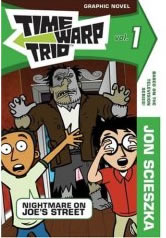
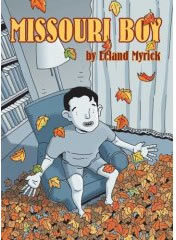
Since I talked about graphic novels in the previous post, I was compelled to check the new book shelf this morning and see what the most recent additions to the juvenile collection, graphic novels, were.

The three pictured here were added in the last two book orders. I've just returned from the circulation desk after checking them out to "me" and adding them to my shelf of books to read. It was interesting to see two of the three, Sardine and Missouri Boy, are published by the same entity, First Second (:01). The Time Warp Trio book is a HarperTrophy publication. Even more intriguing is they are all three in color and bound with heavy stock as opposed to a cheaper paperback.

Here are the three titles:

Update: later that same afternoon ...
The graphic novel bulletin board is finished. It was interesting to see how many of the novels I had chosen to highlight were checked out.

Tags: , ,

Monday, November 06, 2006

Graphic Novels

Relax, I mean graphic in design and not graphic in content. As I type that sentence I am reminded of the looks I received from student workers when they heard me asking children's literature professors if they wanted me to buy graphic novels. Once I explained it as an expanding genre in children and young adult literature, they were humorously relieved. One of the speakers at the conference on Friday discussed graphic novel collection. I enjoyed the session for several reasons, not just because I won a couple of novels in a raffle. The presenter discussed publishers of graphic novels, the graphic novel reader base in his library, how to publicize the collection, and some history behind the current trend towards graphic novel collections in public libraries. This is where the difference between public library collections and academic library collections became obvious.

Generally speaking, a public library will have their juvenile collection separated into different categories; picture books (fiction), middle readers (fiction), young adult (fiction), maybe biographies, graphic novels (fiction and non-fiction), and juvenile non-fiction. This allows for a very "browseable" collection, something the public desires. Public libraries are also responsible for purchasing titles that the general public wants to read, hence the increase in the graphic novel collections. After all, the collection is in reality their tax dollars at work.

Academic libraries are different; there are different sets of “limitations,” or collection development policies, placed on the collection. Then there is the space. Shelving a graphic novel collection within the juvenile literature is challenging as the collection encompasses fiction, non-fiction, juvenile, and young adult literature whose sole purpose is to support the college of education curriculum. Furthermore, as a research library we use library of congress and the literature is shelved accordingly. A book purchased for the juvenile collection is either juvenile or it part of the regular collection. A juvenile/young adult purchase may be placed in the recreational area, but this rare. There is no graphic novel section in the library.

So what does this mean? If graphic novels are not currently being taught in a literature class, my collection, if indeed I even have one, is minimal at best. The question of do we need graphic novels must be addressed. After conferring with children's literature professors about graphic novel purchases, I found out that one of them is requiring his students read a graphic novel. Since his class had been ordering graphic novels from other libraries, a need was not being met, and this lead to the creation of a small graphic novel collection including both juvenile and young adult selections.

Currently, the library collection includes 63 graphic novels with roughly half of them (31) considered juvenile. There are classics by Jeff Smith (Bone) and Neil Gaiman, but the juvenile titles are more difficult and include graphic interpretations of classics such as the Wizard of Oz, Call of the Wild, Tarzan, Mary Shelly's Frankenstein, Romeo and Juliet, and Macbeth. To support this collection graphic novel bibliographies and history and criticism resources have been added to the resource center reference collection. While there are some who question the inclusion of graphic novels in an academic library, this genre deserves to be represented for the literature and art styles presented within.

Tags: , ,